

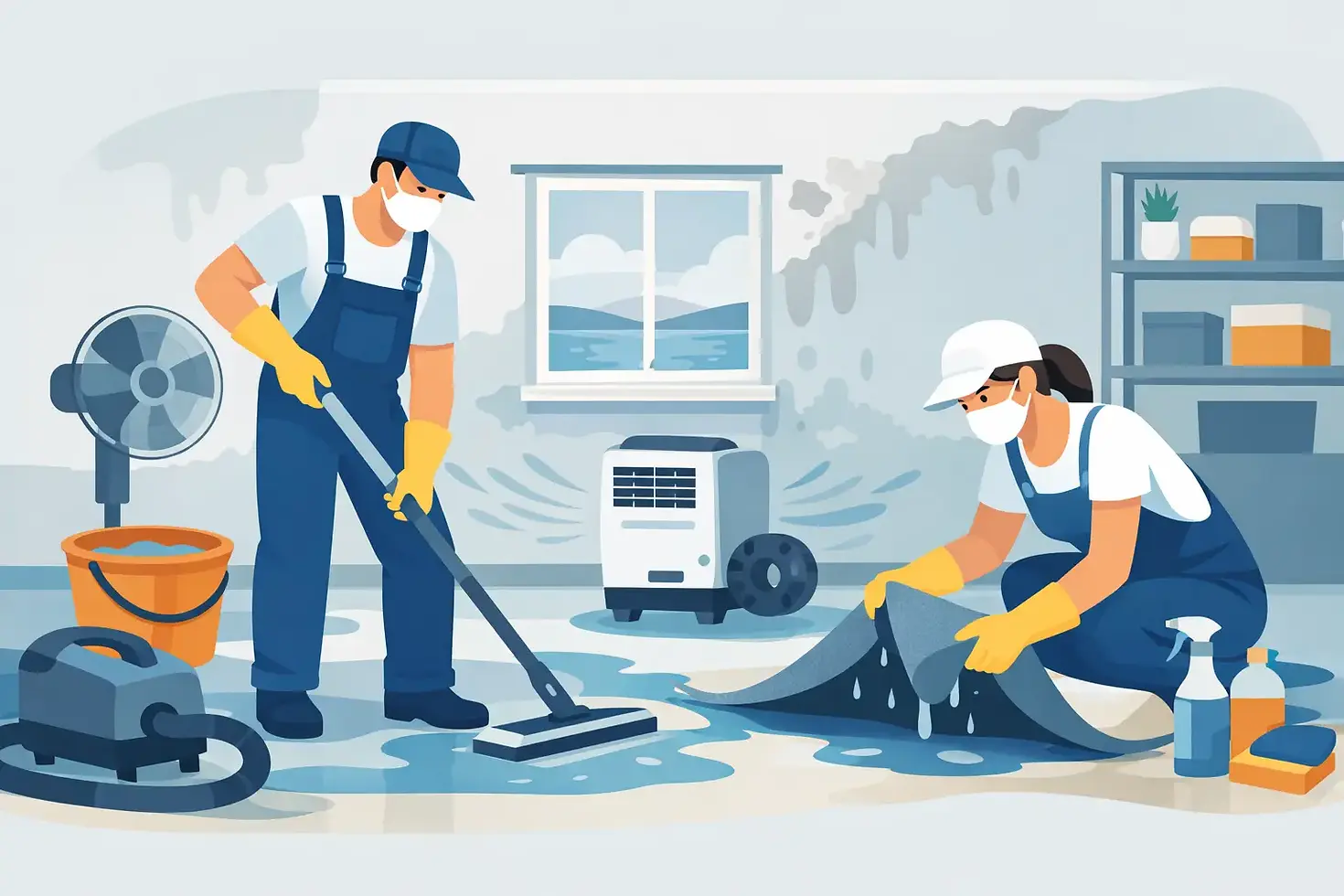
How to Clean After Water Damage Safely
- Yellow Pages Admin

- Jun 12
- 6 min read
A burst pipe at 2 a.m. or a slow leak that went unnoticed for days creates the same problem by morning - water gets into places it should never be. If you are figuring out how to clean after water damage, speed matters, but so does judgment. The goal is not just to dry what you can see. It is to remove what is unsafe, stop hidden moisture from lingering, and get the property ready for proper restoration.
Water damage cleanup can look straightforward at first. Mop the floor, run a few fans, wipe down surfaces. The trouble is that wet drywall, insulation, underlay, wood trim, and flooring often hold moisture long after the visible water is gone. That is where odours, mould growth, swelling, and material failure start.
How to clean after water damage without making it worse
The first step is always to make the area safe. Shut off power to affected spaces if water is near outlets, appliances, baseboard heaters, or electrical panels. If the source is active, such as a plumbing failure or appliance leak, stop it before any cleanup begins. In a commercial or multi-unit setting, that may also mean isolating the area to keep occupants and staff out until hazards are checked.
Not every water event is the same. Clean water from a supply line is one category. Water from a dishwasher backup, overflowing toilet, roof intrusion, or flooding is another. Once water may be contaminated, the cleanup standard changes. Porous materials often need to be removed instead of dried, especially if they have been wet for more than a short period.
If there is any chance the property contains asbestos, lead-based materials, or existing mould, do not start tearing into walls or flooring without checking first. Many older homes and commercial buildings in BC have materials that require controlled removal. In those cases, aggressive cleanup by an untrained crew can turn a water problem into a much bigger health and compliance issue.
Start with water extraction and moisture control
Standing water needs to be removed as quickly as possible. Wet vacuums, pumps, and extraction equipment help clear the bulk water from floors and low areas. The faster this happens, the better your chances of limiting damage to subfloors, wall cavities, and adjacent rooms.
Once extraction is complete, drying has to begin immediately. Air movement and dehumidification are what matter most here, not just heat. Fans can help, but they are not a full solution on their own. Moisture trapped behind walls, beneath vinyl, under laminate, or inside insulation will not dry properly without opening affected assemblies when necessary.
This is the point where people often lose time. Surfaces may feel dry, but internal moisture remains. If drywall is soft, swollen, stained, or crumbling, it usually needs to come out. If insulation is wet, it loses performance and can support mould growth. If flooring has lifted, buckled, or trapped water underneath, drying the top surface will not solve the problem.
Remove damaged materials before mould gets established
One of the most important parts of learning how to clean after water damage is knowing what can stay and what needs to go. Non-porous materials such as some metal, glass, and hard plastic surfaces can often be cleaned and dried. Porous materials are less forgiving.
Drywall, insulation, ceiling tiles, carpet underlay, particleboard, and many composite materials usually have to be removed once they are saturated or contaminated. Carpet may be salvageable in limited clean-water cases if action is immediate, but underlay typically is not. Laminate flooring is rarely a good candidate for recovery after significant water exposure because moisture gets into seams and under the boards.
Baseboards, trim, cabinetry toe kicks, and sections of wall may need controlled removal to allow airflow and inspection of hidden spaces. In a larger loss, selective demolition is often the safest route because it clears compromised materials and exposes the structure for proper drying and rebuilding.
This is also where cross-contamination becomes a real concern. If mould has already started, disturbing wet materials without containment can spread spores into unaffected areas. For property managers and commercial operators, that can quickly expand the scope of the job and the downtime.
Clean and disinfect affected surfaces properly
After unsalvageable materials are removed, the remaining structure and salvageable surfaces need to be cleaned. That usually includes wiping down framing, concrete, tile, and other durable materials to remove dirt, residue, and any contamination left behind by the water event.
Disinfection is not always the first or only answer, despite what many off-the-shelf products suggest. The correct approach depends on the water source and the material involved. Clean water losses may only require cleaning and drying. Grey or black water events demand a more controlled sanitation process, and some contents or finishes may still need disposal.
Avoid soaking surfaces again during cleaning. The goal is to remove residue while supporting the drying process, not restarting it. In enclosed spaces, moisture readings should guide decisions. Visual checks are useful, but they do not tell you what is happening inside framing or under flooring.
Pay attention to the hidden areas
Water does not stay where it first lands. It travels through wall cavities, beneath flooring, into insulation, and along structural elements. That is why a small leak in one room can create damage in the next room or on the level below.
Ceilings that look slightly stained may contain saturated insulation above. Wood subfloors may seem stable but still hold enough moisture to warp later. Commercial spaces often hide damage behind millwork, in service chases, or beneath glued floor finishes. If those areas are not checked, cleanup can look complete while moisture remains trapped in place.
A proper scope often includes opening strategic sections of walls, removing sections of flooring, and checking cavities with moisture detection tools. This is less about over-demolition and more about avoiding the common mistake of leaving wet materials buried behind finished surfaces.
When professional cleanup is the better call
Some water damage can be handled in-house if it is minor, clean, and caught early. Many cases cannot. If water has been sitting for more than 24 to 48 hours, if sewage or floodwater is involved, if mould is visible, or if the damage extends into walls, insulation, ceilings, or multiple units, professional help is usually the right move.
The same applies when regulated materials may be present. Older drywall compounds, floor tiles, ceiling textures, insulation, and other finishes can contain asbestos. Lead may be an issue in older painted surfaces. Once demolition starts, compliance matters just as much as cleanup.
For contractors and restoration teams, having a qualified removal partner can keep the project moving. For owners and managers, it reduces the risk of partial cleanup that has to be reopened later. A company such as Walls To Floor Removal focuses on the removal and remediation side of the job - clearing damaged interior materials safely, handling hazardous concerns where required, and preparing the site for the next trade.
What not to do after water damage
A few missteps cause more trouble than most people expect. Do not leave wet drywall or insulation in place just because the room looks mostly dry. Do not paint over stains or seal in moisture and assume the problem is fixed. Do not use household fans to blow through potentially contaminated water damage without understanding where that air is carrying particles.
It is also a mistake to wait for obvious mould before acting. By the time growth is visible, moisture has usually been present long enough to affect more than the surface. And if insurance documentation is part of the process, take photos and record affected materials before removal whenever possible.
The real goal is to get the space ready for the next step
Water damage cleanup is not just about appearance. It is about making the property safe, dry, and clean enough for restoration, repairs, or reconstruction to begin with confidence. Sometimes that means drying and cleaning. Sometimes it means removing walls, flooring, insulation, and other compromised materials so the structure can be properly assessed and rebuilt.
The best results come from acting early, removing what cannot be saved, and not guessing when hidden moisture or hazardous materials may be involved. A fast response protects more than finishes - it protects indoor air quality, project timelines, and the value of the property. When the job is handled properly, the next phase becomes much simpler.


Comments