

Best Asbestos Abatement Companies: What Matters
- Yellow Pages Admin

- May 20
- 6 min read
When people search for the best asbestos abatement companies, they are usually not browsing casually. They are facing a renovation delay, a property sale, a damaged interior, or test results that changed the whole scope of a project. At that point, the right contractor is not just a vendor. They are the difference between a controlled, compliant removal and a costly problem that follows the site for months.
Asbestos work is one of those services where the cheapest quote can become the most expensive mistake. If containment is weak, documentation is incomplete, or the crew is not properly trained, the risk is not limited to the work area. It can affect occupants, neighbouring spaces, timelines, and the next trade scheduled to enter the building. That is why choosing carefully matters.
What the best asbestos abatement companies actually do
The strongest companies do more than remove material and leave. They assess the affected area, identify the likely scope, set up proper containment, follow regulated removal procedures, handle disposal correctly, and leave the site ready for the next phase. In many cases, that next phase is restoration, reconstruction, or another type of interior demolition.
That full-project mindset matters. A homeowner may need contaminated drywall, flooring, insulation, or textured ceiling materials removed before repairs can begin. A property manager may need a tenant space cleared safely without creating wider exposure issues. A contractor may need a reliable abatement partner who can remove hazardous materials without slowing down the overall schedule more than necessary.
The best asbestos abatement companies understand that removal is only one part of the job. The real objective is a safe, compliant site that allows the project to move forward.
How to judge the best asbestos abatement companies
A professional website and a quick reply are helpful, but they are not enough. Asbestos abatement should be judged on qualifications, process, and execution.
Certification and regulatory knowledge
In British Columbia, asbestos work must be handled according to current safety and regulatory requirements. A company should be able to explain its training, procedures, and worker protection practices in plain language. If the response is vague, overly casual, or dismissive of compliance, that is a warning sign.
You should not have to pull basic safety information out of a contractor. Strong abatement companies are clear about how they approach hazardous materials and what standards guide the work.
Clear scope before work begins
Good contractors do not guess their way through asbestos jobs. They review testing results, assess affected materials, identify access concerns, and explain what is included in the scope. If the site has water damage, fire damage, or partial demolition needs, that should also be addressed early.
A rushed estimate with very little detail may look convenient, but it often leads to change orders, delays, or disputes once containment is in place and the work begins.
Containment, removal, and cleanup procedures
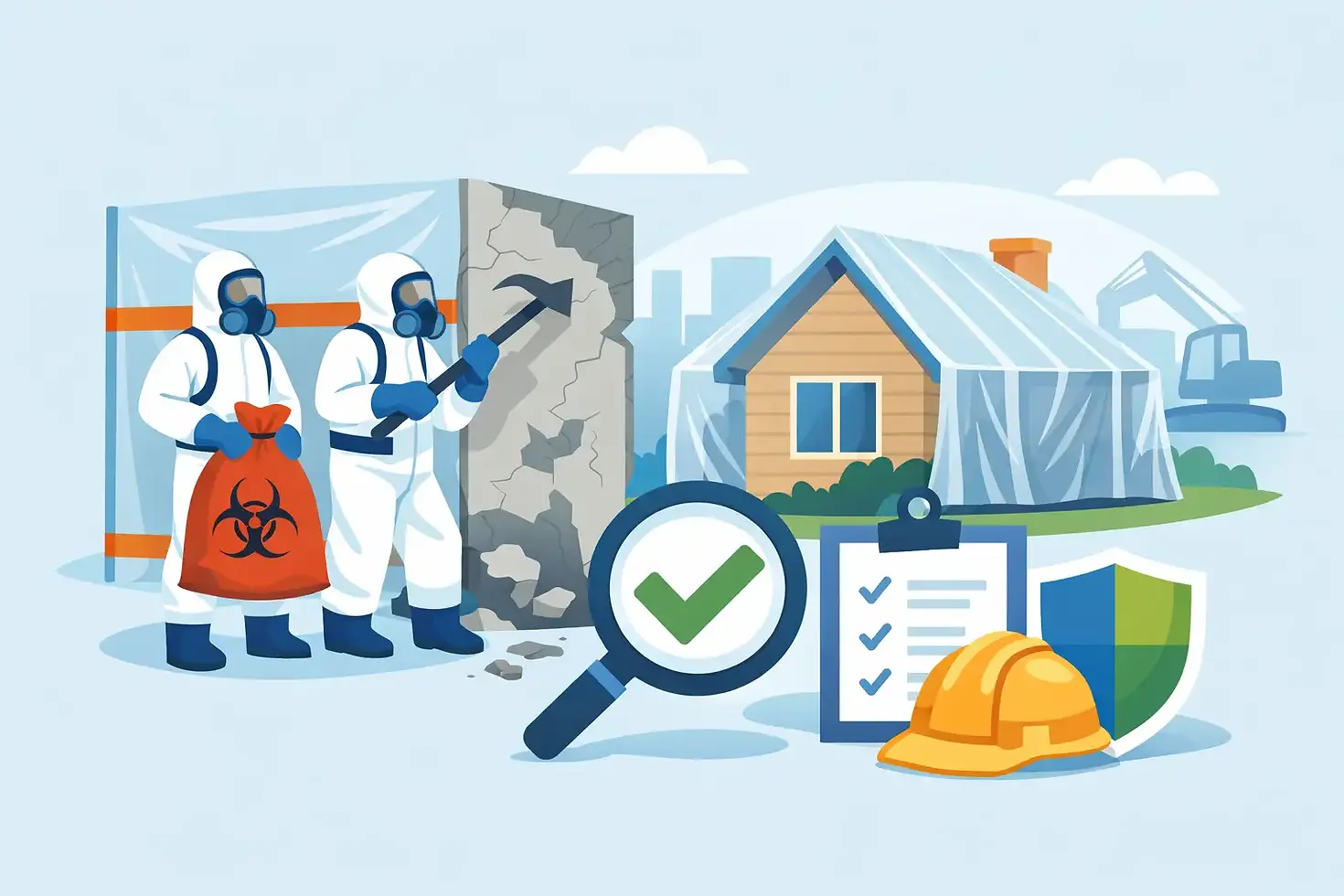
This is where experience shows. The best teams are disciplined about isolating the work area, controlling dust and fibre release, using proper personal protective equipment, and following decontamination procedures. They also understand that cleanup is not a side task. It is part of the abatement process itself.
If a company talks mostly about tearing materials out quickly, with little discussion of controlled removal and site protection, that is not a good sign. Speed matters, but speed without control is not professional abatement.
Disposal and documentation
Asbestos cannot be treated like ordinary construction waste. Disposal has to follow approved handling and transport requirements. Clients should also know what records or reporting will be provided at the end of the job, especially on commercial, industrial, insurance-related, or managed properties.
The best contractors treat documentation as part of the service, not an afterthought.
Red flags that should stop you from hiring
Some problems are easy to spot once you know what to look for. One is a contractor who downplays the hazard and says the material can simply be removed with basic demolition methods. Another is a company that offers a price before asking the right questions about testing, material type, site use, occupancy, or damage conditions.
You should also be cautious if there is no clear explanation of containment, no discussion of worker safety, or no confidence around disposal procedures. Asbestos abatement is not the place for improvisation.
A low price can be legitimate if the scope is small and straightforward. But if one quote is dramatically lower than the rest, there is usually a reason. Sometimes the scope is incomplete. Sometimes key safety measures are missing. Sometimes the contractor is not comparing the same level of service at all.
Why local experience matters in BC
There is a practical advantage to hiring a company that knows local property types, common building materials, and the pace of projects in the Lower Mainland. Older homes, tenant improvements, damage-related tear-outs, and commercial renovations all come with different pressures. A company familiar with these conditions is more likely to plan realistically and coordinate well.
Local experience also helps when asbestos removal is tied to other work. For example, a property may need hazardous material abatement, interior demolition, selective tear-out, and detailed cleanup before restoration crews can start. In those cases, a contractor that understands the full sequence can reduce downtime and avoid unnecessary handoffs.
That is one reason many clients prefer a specialist that can manage both abatement and interior removal under one roof. Walls To Floor Removal fits that need for clients across the Lower Mainland who need safe, compliant removal work that gets the site ready for what comes next.
The best asbestos abatement companies ask better questions
One of the simplest ways to judge a contractor is to notice what they ask before they quote. They should want to know where the suspect or confirmed material is located, whether testing has been completed, whether the building is occupied, what kind of damage has occurred, and what work needs to follow.
Those questions are not sales tactics. They show that the company is thinking about containment, logistics, access, sequencing, and risk. A contractor who asks very little may be preparing to solve problems after the job starts, on your time and budget.
This matters even more on mixed-scope projects. If asbestos is found during a flood cut, fire-damage tear-out, or renovation prep, the right contractor needs to shift from removal planning to hazard control without losing sight of the larger project. That takes experience, not just equipment.
Residential, commercial, and industrial needs are not identical
Homeowners often focus on health concerns, disruption, and cost. They want to know the work will be handled safely and that their home will be clean and ready for repairs. Property managers often focus on tenant impact, scheduling, and records. Contractors and restoration professionals usually need dependable execution, clear communication, and a site that is truly ready for the next trade.
The best asbestos abatement companies can adapt their process to all three environments. The core safety requirements remain the same, but the project management side changes. A home with one affected room is different from a commercial unit with access restrictions or an industrial area with broader operational concerns.
That is why experience in multiple property types is valuable. It shows the company can handle more than one version of asbestos work and still deliver consistent control.
What a strong quote should tell you
A useful quote should give you more than a number. It should reflect that the contractor understands the scope, the hazard, and the project conditions. Depending on the job, that may include the affected materials, containment expectations, removal approach, waste handling, and site cleanup.
Not every quote will look identical, and some jobs require a site visit before details can be finalized. That is normal. What matters is whether the contractor is transparent and methodical. If the estimate feels rushed or incomplete, the work may be handled the same way.
A good company also communicates trade-offs honestly. For instance, a tighter schedule may require more coordination and labour. Hidden materials behind walls or under finishes can change scope. Occupied spaces may need more planning than vacant ones. Honest contractors say that upfront.
Choosing for safety, not just speed
Most clients want asbestos removed quickly, and that is reasonable. Delays affect insurance timelines, renovation schedules, leasing, and reopening plans. But quick service should still be controlled service.
The best choice is usually the company that combines responsiveness with discipline. They show up prepared, explain the process clearly, follow through on containment and cleanup, and understand how their work affects every step that follows. That is what protects people, property, and schedules at the same time.
If you are comparing contractors, look past the surface. Ask how they manage the site, how they protect occupants and workers, how they handle disposal, and how they prepare the area for restoration or reconstruction. A confident, qualified company will have clear answers and a process to match.
When asbestos is part of the job, the right hire is the one that brings control to a difficult situation and leaves the property ready for progress.


Comments